Showing posts with label science. Show all posts

Tuesday, September 29, 2009

How dangerous is pot?

Much to the dismay of my "everyone has done drugs!" former boss, I have never done illegal drugs. I have never even smoked pot, unless you count secondhand smoke. So I don't have a "pot is so great!" take on marijuana, other than to say that there is no scientific evidence to support the notion that it is a gateway drug (biologically).

The scientific literature on the dangers of marijuana is a bit thin. The first report on possible harmful effects of cannabis use is the oft-cited Swedish Army study, where conscripts who reported a heavy use of cannabis in adolescence were six times more likely to be diagnosed with schizophrenia in adulthood than non-users (1). There have been a few other studies suggesting that adolescent cannabis use is a risk factor for psychosis (e.g. 2). The most damning evidence is a longitudinal study by Dutch researchers that found a dose-response relationship between reported cannabis use and psychotic symptoms over a three-year period (3). And now a group has asked that cannabis use be included as a risk factor for psychotic illness in the Global Burden of Disease. (The article is in PLoS, so available for free. Isn't PLoS the greatest thing ever?)

From the article:

Some commentators may well argue that it is premature to conclude that the relationships between cannabis use and psychosis are causal, which raises the question of what the standard of proof should be causal inference. Some may argue for “proof beyond reasonable doubt,” the standard implicitly used in the last iteration of the GBD. It is rare, however, to meet this standard of proof for noncommunicable diseases other than smoking-related diseases. What has changed since the last iteration of the GBD? The broad approach to all risk factors has been to set the standard of proof at “more likely than not,” rather than “beyond reasonable doubt.” If the latter was the standard of proof, then no adverse health consequences of cannabis would be considered apart from dependence.

If we had treatments that resulted in complete, immediate, and sustained remission for all individuals who develop psychosis, then the role of cannabis as an aetiological agent may attract less attention. But schizophrenia remains a poorly understood group of disorders. Even our best treatments are suboptimal. In the absence of better treatments, the most effective way to reduce the disability associated with schizophrenia is to prevent its occurrence when we can. Thus, when considering potential risk factors for schizophrenia, we argue that candidates that offer the opportunity for public health interventions should be accorded more attention (e.g., education about the potential risks of cannabis use). Even exposures that may account for a small attributable fraction of those with the disorder warrant scrutiny.

As the quoted section above alludes to, there is no firm evidence that cannabis use causes psychosis. Could adolescents who are at risk for schizophrenia be self-medicating through use of marijuana? I do not think any of the studies have examined whether those heavy users who showed some type of psychosis later in life also had family histories of psychoses. Are those who experience psychotic symptoms self-medicating with marijuana (use of the drug is more common with those who report psychoses), similar to the abuse of nicotine among schizophrenics? Or is the marijuana use really causing psychosis or compounding its effects in a small population?

Either way, consider yourself forewarned the next time someone says marijuana use is "safe" and passes you a joint. And don't do drugs.

1. Andreasson S, Allebeck P, Engström A, et al. Cannabis and schizophrenia: a longitudinal study of Swedish conscripts. Lancet 1987;11:1483-5.

2. Arseneault L, Cannon M, Poulton R, et al. Cannabis use in adolescence and risk for adult psychosis: longitudinal prospective study. BMJ 2002;325:1212-3.

3. van Os J, Bak M, Hanssen M, et al. (2002) Cannabis use and psychosis: a longitudinal population-based study. Am J Epidemiol 156:319–27

Look what monarch butterflies do with their antennae


I have a little personal history with monarch butterflies: my grandmother used to catch them with my sister and me with a huge butterfly net, then kill them with Raid and put them in flower arrangements. So I rather like the little creatures, and am disappointed that their Mexican fir grove wintering grounds are being destroyed by stupid Mexican workers who only care about money, though what else can you expect with those people.

Anyway, scientists have wondered for years how monarch butterflies are able to find their way back to those forests. Even if you take a migrating monarch and move it to a completely different part of the country, they will still figure out the correct direction to travel. Now we have a big piece of the puzzle.

In a new article in Science, researchers have found that the monarchs contain some type of circadian "clock" in their antennae (independent of their brain) that they use to track the sun's movement, and then determine the correct direction based off of that information.

From a summary article here:

The researchers next covered the antennae in black paint, effectively blocking light sensing by the antennal clocks. Those butterflies homed in on an incorrectly fixed direction: the insect's brain could sense light but couldn't adjust the timing of the sun's movement across the sky in order to steer towards the proper destination. However, when the team used clear paint—which did not alter antennal light input—the butterflies accurately established the southerly flight orientation, indicating that the antenna's reading of light is key to navigation.

Cool, huh? I wish I had antennae. And wings.

Thursday, June 19, 2008

Fries on the Brain

One of the challenges in studying learning and behavior is uncovering the neurobiological mechanisms that separate goal-oriented behaviors into those that provide a primary reinforcer (by satisfying a basic drive, such as the one for food or sex) and those that provide some as-yet-unknown experience linked to a primary reinforcer (cues). For example, an animal that has learned to associate food with a tone will work for the tone, even if no food (the primary reinforcer) is provided.

The ability of these cues to drive behaviors is not fully understood, although cues play a large role in the maintenance of many behaviors, including maladaptive ones such as addiction. How do we learn to work for money (and that the cue - money - will help us satisfy our more basic drives), or in the case of negative reinforcement, why does a yellow light turning red as we drive through it strike a tad bit of fear in us? These situations involve a complex series of associations that are in part linked to our biological survival.

The following sections from a recent Nature article summarize some new findings.

From John Whitfield’s article “The Essence of Happiness” in
Nature.

Burke, K. A. , Franz, T. M. , Miller, D. N. & Schoenbaum, G. Nature advance online publication, doi:10.1038/nature06993 (18 June 2008).

Separating the cognitive (goal-oriented) and general (emotional) systems is difficult, because achieving your goal makes you feel happy. Schoenbaum and his colleagues achieved it by using an ingenious variation on classical pavlovian conditioning.

First, the researchers taught rats to associate one light with a grape-flavoured sucrose pellet, and a different light with a banana-flavoured pellet. Such conditioning makes the lights gratifying on their own — animals will work to experience the cue, even if they don't get a pellet.

Then, the team played sounds along with the lights. The 'grape' light with a sound still delivered a grape pellet. In this situation, animals tend to ignore the extra information and do not learn to associate the sound with food.

But the 'banana' light plus a sound led to a different reward – a grape-flavoured pellet. So in this case, the sound adds information. The light means something nice is coming and the sound tells you what flavour it will be.

Rats like the two flavours equally, so the sound says nothing about the treat's value, only its details.

The team next tested the rats on sounds and lights alone. The animals, they found, will press a bar to obtain either the light or the sound on its own, even if no food pellet follows on. The generalized reward of the treat and the abstract property of its flavour were equally strong motivations.

But rats with damage to an area of their brain called the orbitofrontal cortex, which is thought to be involved in decision-making, would work to see the treat-associated light, but not to hear the grape-associated sound. That is, they will work for a cue associated with positive emotions, but not one linked only to a specific outcome.

It's a bit like separating Homer Simpson's "Mmm… donuts", into a generalized expression of pleasure ("Mmm"), and the specific object of his desire (the "donuts"), and working out the brain regions responsible for each thought.

Schoenbaum suggests that the orbitofrontal cortex, which lies at the front of the brain, just above the eyes, is the home of the brain's cognitive reward system. It acts as a forecaster, predicting the value of different behaviours, learns which ones are ultimately rewarding, and triggers a corresponding emotional response.

Normally the two systems will give the same 'answer'. But the orbitofrontal cortex could also act as a kind of policeman, says Schoenbaum, diverting the pursuit of immediate gratification in favour of longer-term goals.

(The picture of fries is a cue, although I don't think it's sufficiently satisfying.)

Monday, June 16, 2008

Tiny moon Janus, seen before Saturn's rings, with massive moon Titan beyond. Courtesy NASA/JPL-Caltech, Bostonphoenix.com

Thursday, March 6, 2008

ID and science

To briefly continue a thought from here:
The second problem is that definition: what is science? Our current definition of science is quite narrow compared to all that ‘science’ was thought to encompass from the ancient world through the Renaissance. Our current definition of science involves examining mechanisms in a closed system. By way of crude analogy (that A.V. came up with), if a man brings a modern scientist a car and tells him that something is wrong with the brakes, the modern scientist will test out the brakes, examine the car, examine the brake pads, check the brake fluid, etc. If this man is coming in every week telling the modern scientist that something is wrong with the brakes, the scientist will continue doing the same tests to try to fix the brakes. The modern scientist will not begin to wonder if perhaps the man is a reckless driver with anger management issues who repeatedly hits the accelerator and then slams on his brakes during the drive home. The modern scientist makes the assumption that the answers are “in here” – under the hood of the car – and not “out there”–something is wrong with the driver. (Actually, most scientists would eventually begin to wonder if user error was the problem, which is where the analogy falls apart, but I think you can get the picture.) There is no room to teach ID or creationism in a science classroom – they are not science, as it is currently defined. Now if we were to expand the definition of science (and the tools science uses), it might be possible to teach these things as competing “theories.” (Tycho Brahe and Johannes Kepler, after all, were both astronomers and Neoplatonists, without conflict, where the one informed the other.) But that would involve a larger debate about science, education, and our general philosophical approaches.

When the proponents of ID demand that it be taught in the science classroom, they concede to modern science all the points that matter: modern science, instead of being one way of knowing about some components of our universe, is the best way of knowing; truth can only be uncovered through empiricism, naturalism is the only correct philosophical approach. Most discussions by ID proponents don’t revolve around the problems of naturalism as a philosophical approach, but are instead attempts to say that ID should be included by association with naturalism, the rules of modern science. And that’s affirming that the philosophy behind modern science has superiority above all others for understanding truth.

Friday, February 22, 2008

A Day with the Rosicrucians


Or not quite.

This past Saturday, A.V. and I visited the Rosicrucian Egyptian Museum and Planetarium in San Jose. The complex also features a peace garden, a temple, a meeting hall, and an outdoor reflection area that only Rosicrucian members are supposed to enter. (A.V. entered anyway and enjoyed standing under an Egyptian-inspired pavilion surrounded by bamboo. He also used to read the books in “hell.”)

The museum, which boasts "the largest collection of Egyptian-inspired artifacts in the Western U.S.," really does have quite an assortment of ancient Egyptian articles and reproductions. Especially well-done, though a bit old, were the models they had of the Temple of Karnak, a typical ancient Egyptian community, the Djoser step pyramid, and others; they also have a life-size walk-through Egyptian tomb. There were a number of unique voice-over exhibits: one featured an Egyptian birthing room and explained the customs and traditions for pregnant Egyptian women and their newborns (women in Egypt gave birth while standing and crouching with their feet on top of bricks); Akhenaten had an entire room dedicated to explaining his own religious views. Indeed, there was a lot of "explaining" throughout the museum: one could pick up papers in each room that provided more complete explanations of each exhibit in the room. Of course, I am way too smart and a veritable expert on ancient Egypt so I didn't bother doing that, but it was great to have the extra information available (it also made the museum extra kid-friendly, as the kids could even stamp their paper 'museum pass' in each room). The actual artifacts themselves weren't the most impressive I've seen, but the museum as a whole, though small and a teensy bit cramped-feeling – or maybe that was my aversion to all the children running around – was well done and a bargain for the price ($9 for adults) since the planetarium show was free. There was also an additional traveling exhibit on pollination and the importance of bees with lovely photographs of bees in various positions on flower petals, and scent boxes in case one wanted a strong whiff of lavender or vanilla.

I must also praise the gift shop – if you have ever yearned for a 5 inch statue of Anubis, or for one of those foot long reproductions of an Egyptian raft on the Nile complete with two dolls of ancient Egyptians inside – this is the place for you. These made in China figurines were the cheapest I've ever seen them. Less than $20 for a 9 inch tall statue of the goddess Bastet, and the faux gold paint job was still well done. (A.V. was delighted with the three-selection penny smasher.)

The real highlight was the 35-minute planetarium show - “The Mithraic Mysteries.” Anyone who has watched a documentary special on the nativity of Jesus knows that (ahem) December 25th was chosen as the birthday of the Messiah to coincide (ahem) with the celebration for Sol Invictus, a possible title for Mithras, not to be confused with the Persian god Mithra, who also, according to all those documentaries, bears an eerie resemblance to Jesus in his origin, life, and death. Mithraism (surrounding Mithras, who according to most recent scholarship was not directly related to Mithra) was a mystery religion especially popular among Roman soldiers; all that really remains is their iconography. The most famous example, the tauroctony, was the subject of the planetarium show. Derived from David Ulansey’s book, the show explains that the tauroctony may have had astronomical meanings – Mithras is actually Perseus, complete with Phrygian cap, gazing away from the bull (Taurus) that he kills beneath him. The other symbols – the dog (Canis Minor), scorpion (Scorpio), bird (Corvus), and snake (Hydra) likewise have their constellation counterparts. The two boys often featured on the sides, one with torch held up, the other with torch held down, correspond to the crossing of the sun through the celestial equator. Why would they depict the night sky in such a way? According to Ulansey, Mithraism developed in the first century B.C. in Asia Minor, shortly after the discovery by Greek astronomer Hipparchus of precession – the change in direction in the axis of the earth that most obviously causes our “North Star” to change over thousands of years, but also causes the celestial equator to cross the zodiac at a different location during the spring and fall equinoxes every couple thousand years. At the time of his discovery, however, it was believed that the earth was fixed, with various arcs and celestial spheres moving around it. Hipparchus had therefore discovered a new ‘force’ that moved the spheres around the earth, a force that may have been associated with Plato’s 'hypercosmic sun' existing outside the known universe. The tauroctony depicts the constellations that the celestial equator passed through during the Age of Taurus, about 5000 years ago. (The representations in the constellations most likely had additional meanings that played a part in the beliefs about the world and the rituals that believers performed.)

It’s a bit amusing to speculate that the participants in the Mithraic cult were actually worshipping precession, the silly pagans. But it also shows the spread and importance of the Platonic belief that the soul would descend at birth, and ascend at death, through the heavenly spheres to the One that exists outside of creation, and provides clues as to why Christianity may have been seen as especially attractive to converts.

We didn't get into any conversations with Rosicrucians, unfortunately. We did pick up their nice brochure, and peruse the books in the gift shop - nothing quite like books by 20th century mystics about the secret mysteries of Christ! - but the Rosicrucians got to keep their own mysteries.

Tuesday, January 22, 2008

Alien Music

Spacescaping: (according to Terry Riley) combining the sounds of plasma waves in space with a string quartet and chorus

On stage are small metal rods of varying heights; these rods have lights along their axes and at each tip that illuminate to a blue-white glow. The backdrop is a screen that fades from dark blue at the top to light blue at the bottom. A man carrying a violin walks on stage, sits down, and waves his bow over his music stand. A point of bright green light appears, and we hear a large bellowing sound, like a deep voice in a huge underground cavern, that fades away gently to a whisper. A few seconds pass, and the man repeats the sweep of his arm. This time the sound is an electronic twitter that ends abruptly. A man holding a cello walks onto the stage, settles down, and waves his hand behind him over a rod. Again, a point of green light. The sound is an unearthly mid-range chirping. Eventually, as these two men continue their arm sweeps, a violist and another violinist join them on stage, and all four men take part in these motions and each time they do sounds are heard. Eventually, the first man on stage brings bow to string, and the familiar sounds of a violin began, as the screen shifts from blue to a display of different geometric shapes. For those who don’t know, they are close-up pictures of the “how to play” instructions on the gold record sent on the Voyager space craft in 1977 that contains sounds from Earth – to those out there, this is how we sound.

Thus begins Terry Riley’s Sun Rings, a ten-part work performed by the Kronos Quartet and the Stanford Chamber Chorale at Stanford on January 18. The work was commissioned in 2002 for the Kronos Quartet by the NASA Art Program, among others. The work is a multimedia presentation – visual design by Willie Williams, lighting design by Laurence Neff, and sound design by mark Grey – that utilizes sounds of plasma waves from outer space, string instruments, human voices, and pictures of stars, swirling orbs, mathematical equations, the solar prominences, and life here on Earth.

The sounds from space are from the collection of physicist Don Gurnett, a builder of plasma-wave receivers sent on interplanetary spacecraft. Plasma, ionized gas, can propagate waves caused by the movement of a series of electrically charged particles and the response of those particles to electromagnetic fields. The waves that a plasma can support can reveal a great deal of the characteristics of that plasma. The waves themselves are detectable with an electrical antenna and a radio receiver. Thus, we know that lightening and the Northern lights make whistling sounds, electrons trapped in magnetic fields (such as those surrounding most of the planets) make bird-like sounds called chorus, and the place near Jupiter where the solar wind (high velocity plasma) meets Jupiter’s magnetic field sounds like a sonic boom.

The work uses those sounds, looped rhythmically or played in response to a hand movement from the musicians. The musicians sometimes duplicate those sounds, at other times the sounds are the background for rapid-fire arpeggios. At all times, the sounds from the stage are accompanied by visuals on the screen behind the musicians and by the lights of the rods. At one point, as the musicians begin playing music so lush it could be a Brahms string quartet, the rods light up at their tips and the screen reflects the blackness with twinkling light from the stars - the night sky. This drifting into space dissolves as the violist plays increasingly dissonant sounds, and the screen becomes fiery red, and then fades into orange and yellow as the violins repeatedly play a 6-note lullaby.

At another point in the piece, human voices join in and duplicate the space sounds: in a choral feat, while holding long notes, they manage to sound like chirps and eerie whistles. They sing words that cannot be identified, but as the musicians stop playing and the screen goes black, they begin to flatly speak sentences – a cacophony of the various phrases that we, through radio waves, constantly send out into space.

This work reminded me of the necessity of the experience of live performances – the immediacy of it, the thrill of being part of an audience participating in the event. I don’t think I would have enjoyed this work (indeed, I’m not a big Terry Riley fan) listening to it on cd or watching a clip on youtube. Some things need to be able to pierce you or engulf you (visually and aurally). And it’s partly because of the features of live performance that I cannot recall the last time art left me so optimistic. There’s a certain sunny innocence in our explorations of the other planets and further out into deep space, in our desire to send out little feelers and try to see and hear what’s out there, and wanting whatever it is out there to know what’s back here – the desire to communicate as a basic human yearning.

The final part of the work begins with the well-known image of man and woman on the Pioneer plaque, his hand waved in a friendly gesture. The work ends with the words “One earth…one people” spoken over and over again, as various images from earth show up on the screen. And the final sound is a human voice saying, “one love.”


This record represents our hope and our determination
and our goodwill in a vast and awesome universe.

- Jimmy Carter on the Voyager record

Saturday, May 19, 2007

The Homeless, Dispelling the Myths

I attended Psychiatry Grand Rounds a few weeks ago for a talk by Dr. Carole North, a psychiatrist who is probably most famous as an epidemiologist. She has done several studies looking at the homeless population.
I won't go through every aspect of her talk, but will provide a few fun facts here:

Substance abuse accounts for most of the mental illness in the homeless population. It is also hypothesized that increased rates, since 1980, of bipolar disorder and schizophrenia may be related to the effects of continued use of crack cocaine.

The rate of non-substance abuse mental illness in the homeless population is not nearly as high ("50% of the homeless are schizophrenics!") as is commonly thought. The rate of schizophrenia is around 6% - schizophrenia affects around 1% of the general population. In 1990 in St. Louis, depression was highest, but even this was related to what Dr. North termed 'misery' - higher in men, and most likely associated with having to be out in the elements on days of harsh weather.

African-American men who are homeless are more likely to be younger, have jobs, and still make less income than Caucasian men who are homeless.

Women are most likely (around 20%) to be homeless because of family conflicts.

Of those who are substance abusers, most use cocaine (including crack), and they typically do not use money from government assistance or income from jobs to buy drugs. No, by a large percentage, they use the money they get from panhandling, and in some cases make up a disproportionate number of panhandlers. So know that when you give money to panhandlers, there's a good chance it will be used to buy drugs. As Dr. North stated at the end of her talk, she gives money to shelters and other services for the homeless, but not to panhandlers.

Only two people, out of nearly 900 in one of her studies, said that they chose to be homeless.

What is Biomedical Engineering?

Hmm, that has always been a tough question to answer because the field is so broad. Briefly, I'd describe it as the application of principles from mathematics and physics to physiology. Or it's taking concepts from mechanical and electrical engineering and applying it to the human body. I decided to major in biomedical engineering at a time when I wanted to go to medical school to be a psychiatrist, after realizing, the intellectual snob that I am, that pre-med and biochem and all those typical biological science majors were 'too easy.' I also subsequently decided that med school was too easy (and having taken med school courses, really, the classes are easy), so here I am.

During my time at Texas A&M (1997-2001), students in biomedical engineering had to take three courses in calculus and one in differential equations, two courses in physics, at least two electrical engineering courses, at least two mechanical engineering courses, and two courses in physiology designed for biomedical engineers, all before being admitted to "upper classes" (one also needed to have at least a 3.3 GPA) and taking the BMEN courses for our major.

To divide biomedical engineering into three headings: 1) modeling; 2) artificial devices; 3) signal processing/equipment, that were covered in various courses in my last two years as an undergrad. (Texas A&M's College of Engineering is very peculiar in that any engineering degree would take someone 5 years to complete if they never exceeded the 18 hour per semester limit - I got around this through alot of AP credits when entering and summer school, but it is quite odd to have one's scheduling book advise 21 hours of engineering classes per semester for one's final four semesters - one would have no time to do ANYTHING but homework.)

1) Modeling.

a. Blood flow in the body is pulsatile non-Newtonian flow, and blood can have variable viscosity. The blood vessels in your body experience time-dependent forces, including shear stress. Indeed, growth factors in the epithelial cells of your blood vessels are only released when the shear stress from the movement of blood through the vessel is applied, and when the stress is outside normal limits is when all sorts of nasty things begin to happen to your blood vessels (there is also shear rate, separate from shear stress, and the relation between the two depends on the viscosity, which itself is largely dependent on the clotting factor fibrinogen). Abnormalities in blood vessels (such as from artherosclerosis) then form secondary flow streamlines in the vessels, and biomedical engineers who work on these issues would calculate the patterns, forces, axial velocities, and shears and strains that exist. The results are applicable to creating artificial tissue that could duplicate the functions of blood vessels, but it's also just a good ol' extension of the idea that math is the language that underlies the universe.

b. Clearly enough, your nervous system is a huge electrical circuit. So are parts of your muscles, and even transfer in your kidneys can be modeled as en electrical circuit.

c. Fluid transfer in your body, it is assumed, operates the same way as fluid transfer in any other system. One can model the body and different systems as a number of different compartments that interact according to the permabilities/diffusive properties of each membrane. Your lungs work this way, your lymph system works this way, oxygen moving from the hemoglobin of your red blood cells to another cell operates this way.

For example, a wonderful derivation (I'm not going to type out the equation):
We ignore the particulate nature of blood as well as the mass transfer resistance of the red blood cell. The blood is assumed to be in plug flow with an average velocity represented by V. Also note that the hemoglobin is carried along by the red blood cell at the average blood velocity (V). R HBO represents the volumetric production rate of oxygenated hemoglobin. After dividing by 2πr∆r∆z, and taking the limit as ∆z→0, we obtain the following differential equation that describes the mass balance for ozygenated hemoglobin within the blood flowing through the capillary....(From Fournier's Basic Transport Phenomena in Biomedical Engineering)
I only included it because I once had to spend an entire semester doing such derivations, and it was alot of fun. Math is great! Even reading that book again made my heart flutter. If the above paragraph does not do the same for you, biomedical engineering and engineering in general are probably not for you.

2) Artificial devices. Tied to modeling, it does no good to build a prosthetic leg if one doesn't know the forces, stresses, and strains that the device may experience. After modeling the act of walking, in terms of forces, angles, rates, etc., one can design a device that can perform the task of walking, but at the same time does not alter the forces experienced by the other bones in the body. Those forces are important for proper bone growth, and using too strong of a material for a prosthetic weight-bearing device, or using a material that vibrates could affect the other bones of your body. We encounter similar problems with building artificial hearts and lungs: constructing these organs on nothing but mechanical engineering principles can be done easily enough, but one must also consider the particular additional features of these organs that contribute to proper function in the body.

Several of the students in the department had internships at NASA. Of course, it is of great interest to NASA to know the conditions under which the human body functions here on earth (specifically, with gravity), to devise ways to monitor the health of astronauts and counteract the effects of weightlessness, including perhaps devising special exercise equipment.

3) And finally, designing all that fancy equipment one sees in a hospital is now primarily the job of biomedical engineers - EEG and ECG recorders, heart rate monitors, ventilators, etc. A lot of signal processing is going on in those machines, and I hope to never again have to do Fourier and Laplace transforms by hand (that was a wicked professor). My design project for the second semester of my senior year was to write a program that would allow someone to input a night of EEG recordings, and could output the time spent in each stage of sleep with each major wave event noted. Such is the work of biomedical engineers who act as the interface between the performance of the body and processing that performance into language that can be understood by clinicians.

So that is the 'brief' introduction to biomedical engineering that I will provide here. It was a very fun major that incorporated lots of soldering in an advanced clinical engineering class, the shop class I never took (in constructing a plastic injection molding machine that could make skin buttons for insulin injection ports), and learning FDA device regulations. But mostly, it was doing lots and lots of math that I love, and applying it to the human body. Fluid dynamics, pressure, strain, YEAH! So don't consider it unless you enjoy calculus (triple integral-type calculus) and differential equations, and prefacing every solution with a list of assumptions, as all good engineers do.

Saturday, April 28, 2007

Changing Attitudes about Addiction

In the 1960s, Dr. Marie Nyswander, a trained Freudian psychoanalyst, and Dr. Vincent Dole, a metabolic disease specialist who was chair of the NYC Health Research Council's Committee on Narcotics (not a job he particularly wanted) established the first methadone maintenance clinics in NY for heroin addicts. In the late fifties, Nyswander had begun working with jazz musicians addicted to heroin. The prevailing Freudian theory of heroin addiction at that time hypothesized that these male artists were actually homosexuals who used heroin to over-activate the superego and suppress the id. The overall understanding of drug addiction in the 60s was that there was an "addictive personality" type that took drugs to escape reality in order to conceal inadequacies. Frustrated by her experience with her patients' propensity to relapse, Nyswander accepted a position at the Rockefeller Center offered by Dole and the two began a collaboration to discover both the nature of addiction and possible treatments. In 1965, they were the first to establish methadone treatment clinics. In 1967, Dole and Nyswander published a groundbreaking theory that heroin addicts had undergone permanent metabolic changes, and that abstinence was an unrealistic expectation - maintenance in the form of methadone replacement was the goal. It brought into prominence the existing but previously unpopular theory that drug addiction was a physical disease and not a moral failing, as Drs. Nyswander and Dole saw no correlation between sociopathic tendencies and addiction once addicts were being treated. They were one of the first to refer to the disease of addiction as "persistent neurochemical disturbance," though the theory can be dated (without scientific support) to the 20s. In personal gossip, in 1965 Nyswander abruptly ditched her writer husband and married Dole.

More info about methadone: it is a long-lasting mu opioid receptor agonist. It reduces craving and withdrawal symptoms, but does not produce euphoria unless doses are very high. If heroin is administered while methadone is on board, it prevents the euphoria associated with heroin. Its use as a replacement therapy is controversial and affected by general attitudes and perceptions about drug addiction. The late 70s especially saw strong demand to not open more methadone clinics, as punitive measures against drug addicts again became popular. Its controlled substance status prevents it from being administered by a personal physician, and it can only be given at one of these special clinics (it also is rarely allowed to be self-administered at home). I believe the Drug Enforcement Agency, and not a health care organization, is still the group that operates methadone clinics.

More about heroin: Heroin is converted into morphine in the brain, and acts at μ-opioid receptors on GABA inhibitory interneurons in the ventral tegmental area. This activation may close N-type calcium channels, possibly through G-protein interactions or inhibition of adenylyl cyclase. These interneurons are therefore inhibited. The resulting disinhibition at the post-synaptic cell leads to increased firing of dopaminergic cells that are usually inhibited by these interneurons.

The first epidemic of opiate addiction in the U.S. occurred after the Civil War - it is estimated that up to 400,000 soldiers were addicted to morphine (the infamous "skin-poppers," - morphine administered subcutaneously). The next time opiate addiction was widely publicized in this country was after the Vietnam War; where it's estimated that up to 50% of American soldiers used heroin regularly while in Vietnam, and 20% returned to the U.S. addicted. This was also around the time when cocaine was touted as "the perfect drug" by a weekly news magazine, a "non-addictive party drug," because of the lack of physical withdrawal symptoms from repeated cocaine use - it was believed then that addicts took drugs to alleviate withdrawal symptoms. Thirty years later, the anhedonia hypothesis has largely been discredited.

Thursday, March 22, 2007

The Brain, the Mind, and the Self

A Brief Tutorial from the Neuroscience Perspective (deliberately ignoring Philosophy, see below)

Brain: an organ of soft nervous tissue contained in the skull of vertebrates, functioning as the coordinating center of sensation and intellectual and nervous activity

Mind: the element of a person that enables them to be aware of the world and their experiences, to think, and to feel; the faculty of consciousness and thought

Self: a person’s essential being that distinguishes them from others, especially considered as an object of introspection; from Brok’s dictionary definitions (taken from New Oxford)

In a first year grad school course on drug abuse, we were asked by the professor why people take abused drugs. My classmate and I, the only two neuroscience students in the class, responded "because of what they do to the brain - their pharmacological sites of action affect areas of the brain involved in euphoria and habit formation, etc." "NO, people take drugs because of how it makes them FEEL!" was the retort from a psychology student. Nevermind that there are mountains of evidence (cf TE Robinson) that mammals who habitually use drugs do not "like" the drug anymore (in science-speak, rodents and primates develop tolerance to the euphorigenic effects of abused drugs after repeated drug exposures), but neverthless crave it. No, the correct response is, "You don't FEEL ANYTHING independently of your brain!!!" (At least, not in our mortal bodies.) One's perception of the world occurs entirely through that organ at the top of your body.

[Fun fact: The adult human brain is about 2% of body weight. A cat's brain is 0.8% of its body weight. This is why I call my kitty "pea-brain" and often mock her ability to process info.]

If you’ve ever held a human brain in your hands, as I have, you know that it is not very impressive – only about three pounds or so, the size of the clenched fists of an average man, just tissue with a few spaces (sulci and the ventricles). And yet, this organ is responsible for what we know of ourselves and our environment. And all this organ really does is move ions around.

Think about it (move some potassium and sodium around in the cerebral cortex of your right hemisphere). Imagine yourself walking with a loved one on a sidewalk along the beach and gazing out at the horizon. Suddenly your fingers, which are running along a rail, contact a piece of gum. The information about that object is running up your fingers, hand, and arm, to your spinal cord, through the brain stem, through the reticular formation into your thalamus, and then to areas of the somatosensory cortex, then back to motor cortex and cerebellum and down through the brain stem to move your fingers off of the gum, at the same time as your visual cortex and motor cortex are sending information to the cerebellum to plan the movement of your head and then sending motor signals through the accessory nerve (XI) so that your eyes can look at the gum you have touched (through the oculomotor nerve (III) and trochlear nerve (IV), then back through the optic nerve (II)); from the thalamus, info is being sent to your hippocampus to sort through prior experiences that are similar to the current tactile sensation; your limbic system and associated cortex are 'deciding' what 'emotion' you 'feel' about this experience, and then relaying that out to motor areas to change your facial expressions through the facial nerve (VII) - we are social creatures, after all; and information is also coasting to Broca’s area and then back out to the nerves connected to muscles of the mouth, lips, and tongue so that you can say something to your loved one about what you have just touched. See how long it took you to read that? Your nervous system does this in fractions of a second through nothing more than moving around some Ca2+, Na+ and K+

Take out parts of the hippocampus, and you’d forget who you are. Remove parts of your posterior parietal association cortex, and you wouldn't recognize your limbs as belonging on your body. How do we integrate all these different parts into a 'self' that we are aware of?

He said, "It's all in your head," and I said, "So's everything," but he didn't get it. - Paper Bag, Fiona Apple

Broks' writes: “We continually, and effortlessly, picture each other’s thoughts and intentions. We form assessments of what people ‘have in mind’ – presupposing that there are such things as minds…The same mental machinery enables us to form ideas of ourselves as unified and continuous beings – to make sense of what is going on with regard to our own mental states. People with impoverished mind-reading skills (such as autistic people), or with rich but unreliable interpretations of their own and others’ mental activities (like schizophrenics) are severely disadvantaged.” And yet schizophrenia is most likely attributable to a complex organization of impaired cholinergic and glutamatergic transmission in cortical regions of the brain (cholinergic and glutamatergic receptors are cation channels once activated). Autism may be the result of abnormalties of cell size and transmission in the temporal lobes of the brain and the limbic system. If we look closely enough, can we understand mind and self?

[I'm largely ignoring philosophical perspectives on the mind and body, as science completely rejects dualistic thinking and more recent theories focus on whether and/or how empiricism can be used to understand the mind (see Colin McGinn's arguments that humans may lack the cognitive ability to understand the mind; philosophers like Daniel Dennett and neuropsychologists like Hebb argue the opposite) and not-yet-developed methods to understand the brain's function (see John Searle and Thomas Nagel).]

According to one researcher, as humans developed language, areas of the brain became involved in forming a cohesive narrative of one’s life experience, ultimately generating a sense of ‘self.’ Maybe neuroscientists will one day prove Buddhism correct? (I'm being facetious.)

When considering questions of mind and self from a neurobiological perspective, we must take into account the following factors:

unity nature of consciousness: we experience the world as a sum, not all the parts separately

intentionality: our experiences have meaning that the mind collects and represents over the range of our lifetime

subjectivity: our experience of the same stimulus differs. Far from being machine-like, our minds deal with semantics like values, sense, and meaning (see Searle). These are inherently subjective.

So where does that leave us? Can neuroscientists find the 'seat' of the self or consciousness, tucked somewhere in cells that are doing nothing much grander than adding up electrical potential from ion concentrations? (Actually neurons, like almost all cells, have receptor areas and second messenger signalling that enhance or diminish their responsivity to inputs and outputs.) Wasn't there a magazine article that claimed neuroscience had disproven the notion of the soul? This is the century of neuroscience, or so it was titled by one popular magazine at the turn of the century. This century will see scientific examinations into the above questions (and hopefully I'll stay employed), and this brief overview is only meant to provide a glance into the issues.

References:

Into the Silent Land: Travels in Neuropsychology (2003) by Paul Broks
Fundamentals of Human Neuropsychology (1996) by B Kolb & IQ Whishaw
Fundamental Neuroscience (1997) ed. DE Haines
Principles of Neural Science (2002) ed. Kandel, Schwartz, & Jessel

Saturday, March 17, 2007

Cystic Fibrosis and Chloride Conductance

Cystic fibrosis is the result of reduced Cl- conductance in epithelial tissue. An autosomal recessive disease that is a result of a mutation on chromosome 7, affecting the cystic fibrosis transmembrance conductance regulator (CFTR), patients with cystic fibrosis die young, usually of lung failure. (There are also problems with sweat, pancreatic function, and infertility.) There is currently no cure; gene therapy is probably the best hope for the future. (I will post about gene therapy in the future.)

There are several classes of mutations in the CF gene that can be responsible for the malfunction in chloride conductance. These mutations disrupt CFTR function in the following ways: preventing expression of the transcript, reducing cell-surface expression of CFTR, impairing channel regulation, or by altering the channel properties. However in 70% of cases, the mutation is a three-nucleotide deletion which eliminates the amino acid phenylalanine from the protein CFTR, and because of the location of the absence, CFTR does not fold properly and cannot leave the endoplasmic reticulum/Golgi system.

As a consequence of these changes, chloride ions (negatively charged) that usually move passively through the CFTR and maintain equilibrium between the intracellular and extracellular space, now become trapped inside the cell. This in turn disrupts the electrical gradient, so that sodium ions (with their positive charges) also do not have their usual concentrations inside and outside the cell (sodium now stays inside the cell). Since NaCl becomes trapped inside the cell, water also moves from the extracellular space into the cell by osmosis, resulting in the accumulation of a higher than normal concentration of salt outside of the cell - the basis for the sweat test for cystic fibrosis (patients have higher than normal concentrations of salt in their sweat).

Due to this accumulation and the lack of normal water transport, the fluid layer in the lungs becomes more viscous and contains a higher concentration of mucous than in normal patients. The mucous plugs impair breathing and trap bacteria, making infection more likely. Additionally, the high NaCl concentration of the surface fluid in the lungs inactivates the antibacterial agents secreted by the lung epithelial cells. The bacteria therefore multiply, and most CF patients have established chronic pulmonary infection within the first few months of life. The resulting inflammatory response contributes to the mucous and leads to chronic lung damage.

So see how much trouble a little thing like negatively charged chloride ions not being able to move out of your cells can cause?? I hated taking a course on ion channels my first-year in grad school (I'm a behavioral neuroscientist, and had had all the electrical engineering I wanted in college), but the darn things are actually very important.

Information taken from Ion Channels and Disease (2002) by Frances M. Ashcroft. Graphic and description can be found here.

Saturday, March 10, 2007

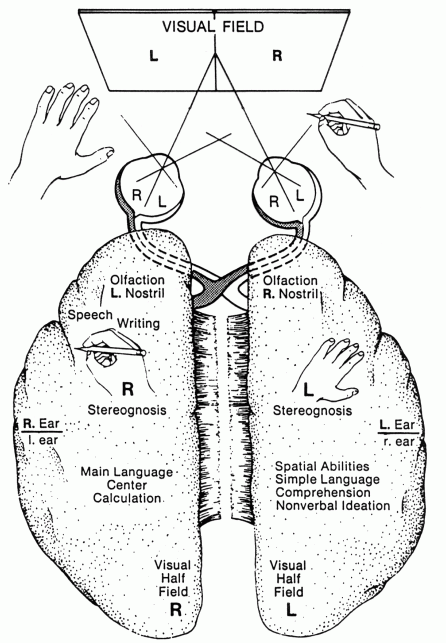
The Right Hemisphere is Mute (mostly)


In split-brain patients, the cerebral hemispheres have been separated in order to control epileptic seizures. This separation is accomplished by sectioning two white matter structures that connect the two hemispheres, the corpus callosum and anterior commissure, in a procedure known as corpus callosotomy. Split-brain patients seem to have two independent conscious selves. By using them as subjects in experiments, researchers can determine the roles of the two hemispheres.

[Brief note: Because of the retinal connections, an object seen in the left visual field is seen by the right hemisphere independently of the corpus callosum. The corpus callosum, however, is necessary for an object in the left visual field to be seen by the left hemisphere. Thus, in split-brain patients, objects in the left visual field are seen by the right hemisphere and not the left, and objects in the right visual field are seen by the left hemisphere and not the right. This can be seen in the drawing above of a horizontal section, as the R & L in the visual cortex of the respective hemispheres.]

Sperry, Gazzaniga, & Bogen demonstrated the independence of vision and language by presenting visual stimuli to either the right or left visual field of split-brain subjects. When an apple is presented in the right visual field (therefore, seen by the left hemisphere), a split-brain subject will report seeing an apple. However, when an apple is presented in the left visual field (therefore, seen by the right hemisphere), the patient denies having seen it. The patient COULD identify the object with the left hand by pointing to it, and could pick it out from several others by feeling it when it was covered. But he could not name what he saw. He could only identify it through nonverbal means. It seems the right hemisphere cannot talk.

Almost all right-handed people have left-hemisphere speech – meaning, the left-hemisphere is dominant for speech. (Most left-handers also have left-hemisphere speech, but 25% have right-hemisphere speech.) The right hemisphere can recognize very simple language: split-brain patients who see D-O-G with their right hemisphere (left visual field) can select a model of a dog with the left hand. Though it may be mute, the right hemisphere is superior in spatial-perceptual problems (like putting together blocks in a pattern).

- taken from KSJ, Principles of Neural Science

Saturday, March 3, 2007

Black holes, anyone?

Empire of the Stars: Obsession, Friendship, and Betrayal in the Quest for Black Holes by Arthur I. Miller (2005)

This largely boringly written book – the best parts are the footnotes that discuss the findings dully presented in the text – chronicles the career of Subrahmanyan Chandrasekhar, who first proposed and calculated that there was an upper limit to the mass of a white dwarf: any white dwarf with a mass of over 1.4 times the solar mass would began a process of collapse that would lead to a singularity, a point of infinite density and zero volume. Chandra presented his findings in 1935, only to be met with harsh resistance, particularly from Arthur Stanley Eddington, then the pre-eminent astrophysicist in the world.

Miller tries to make a case that racism played a part in the professional response to Chandra’s calculation; certainly the professional goals of other prominent scientists led to the ignoring of Chandra’s findings, as did presuppositions from well-regarded scientists, like Eddington and Einstein, that the universe would not yield an infinite result. But to me, the story sounds all too typical of academia – the group in power wants results and conclusions that match up to their own way of thinking and are resistant to novelty. What else is new?

Although Chandra undoubtedly felt the condemnation from Eddington and the slighting of his work by his peers for the rest of his life (he was angry that he didn’t win the Nobel Prize twenty years earlier than he did), he went on to make significant findings in other fields away from astronomy, and did not seem to be professionally crippled by the experience, no matter how it wounded him personally.

Of greater interest in the book is the intellectual evolution towards the acceptance of black holes: from the 1935 negative reaction to the 1960s theorizing that indeed, black holes must exist, although evidence of their existence had not been found to date. There’s some cool stuff in this book about the nuclear arms race, hydrogen bombs, and the death of stars, but I really would never have finished this book if I hadn’t been stuck in an airport for 4 hours and wanted to avoid digging through my luggage for another book. It’s not the content, which could be fascinating. It’s the writing, dull as dishwater.

One fine example (pg 178): “Chandra had a keen eye for lurking stability problems; his forte was identifying the exact point at which a star is likely to collapse. He spotted a flaw in Gamow’s argument. The challenge was irresistible, and he decided to turn his attention to white dwarfs one last time.” Absorbing mystery yarn? Action-adventure for the teen-boy crowd? Cliched phrases, Alex, for $600!

Anytime reading the footnotes becomes more engrossing than the actual text, something is wrong. (One of the gems of the footnotes is that there may be white dwarfs that are diamonds, composed entirely of compressed carbon. Another is the story of Fuchs’ espionage.)

So unless anyone wants to know more from me about this book, I’ll put a black hole tutorial in this space.

(Abbreviated in parts from Stuart J. Robbins' site)

Classifications of black holes: mass, spin, and magnetic field

Stellar black holes: have a mass of 10-100 times the solar mass.

Supermassive black holes: have a mass of millions to even billions of solar masses.

Schwarzschild black holes: no spin and no magnetic field. It has two main components - a singularity and an event horizon. The singularity is what is left of the collapsed star, and is theoretically a point of 0 dimension with infinite density but finite mass. The event horizon is a region of space that is the "boundary" of the black hole. Within it, the escape velocity is faster than light, so it is past this point that nothing can escape.

Reissner-Nordstrøm Black Holes: no spin and a magnetic field. It has a singularity and two event horizons. The outer event horizon is a boundary where time and space flip. This means that the singularity is no longer a point in space, but one in time. The inner event horizon flips space-time back to normal.

Kerr Black Holes: spin and magnetic field. A Kerr black hole adds another feature to the anatomy - an ergosphere. The ergosphere resides in an ellipsoidal region outside the outer event horizon. The ergosphere represents the last stable orbit, and the outer boundary is called the static limit. Outside of it, a hypothetical spaceship could maneuver freely. Inside, space-time is warped in such a way that a spaceship would be drawn along by its rotation.

An interesting point that comes up in the case of a spinning black hole is that of the naked singularity. The faster the black hole rotates, the larger the inner event horizon becomes, while the outer event horizon remains the same size. They become the same size when the rotational energy equals the mass energy of the black hole. If the rotational energy were to become more than the mass energy, the event horizons would vanish and what would be left is a "naked singularity" - a black hole whose only part is the singularity.

Yet another distinguishing feature of the Kerr black hole is that, since it rotates, the 0-D point that is the singularity in the Schwarzschild and Reissner-Nordstrøm black hole is spun into a ring of 0 thickness. Interesting theoretical physics can take place around this ring singularity. One consequence is that nothing can actually fall into it unless it approaches along a trajectory along the ring's side. Any other angle and the ring actually produces an antigravity field that repels matter.

NOTE: The only physical part of a black hole is the singularity. The other parts mentioned are mathematical boundaries. There is no physical barrier called an event horizon, but it marks the boundaries between types of space under the influences of the singularity.

Two other features can characterize a black hole: accretion disk and jets.

An accretion disk is matter that is drawn to the black hole. In rotating black holes and/or ones with a magnetic field, the matter forms a disk due to the mechanical forces present. In a Schwarzschild black hole, the matter would be drawn in equally from all directions, and thus would form an omni-directional accretion cloud rather than disk.

The matter in accretion disks is gradually pulled into the black hole. As it gets closer, its speed increases, and it also gains energy. Accretion disks can be heated due to internal friction to temperatures as high as 3 billion K, and emit energetic radiation such as gamma rays. This radiation can be used to "weigh" the black hole. By using the doppler effect astronomers can determine how fast the material is revolving around the black hole, and thus can infer its mass.

Jets form in Kerr black holes that have an accretion disk. The matter is funneled into a disk-shaped torus by the hole's spin and magnetic fields, but in the very narrow regions over the black hole's poles, matter can be energized to extremely high temperatures and speeds, escaping the black hole in the form of high-speed jet.

Where do black holes come from?

Current theory holds that black holes form in three main ways. The first is that if a star has more than nine solar masses when it goes supernova, then it will collapse into a black hole. The reason that a neutron star stops collapsing is the strong nuclear force, the fundamental force that keeps the center of an atom from collapsing. However, once a star is this big, the gravitational force is so strong that it overwhelms the strong nuclear and collapses the atom completely. Now there is nothing to hold back collapse of the star, and it collapses into a point (or, in theory, a ring) of infinite density.

A second way for black holes to form is that, in some rare instances, two neutron stars will be locked in a binary relationship. Because of energy lost through gravitational radiation, they will slowly spiral in towards each other, and merge. When they merge, they will almost always form a black hole.

Finally, a third way was proposed by quantum cosmologist Stephen Hawking. He theorized that trillions of black holes were produced in the Big Bang, with some still existing today. This theory is not as widely accepted as the other two.

AG again, providing cool facts about black holes (see Hawking's Brief History of Time or Greene's The Elegant Universe for more):

Black holes aren’t really black. As proposed by Stephen Hawking, black holes emit a type of radiation due to escaping particles. The intense gravitational field near the event horizon of a black hole can briefly split a pair of photons apart. If one falls through the event horizon, the other particle, which would have been annihilated by its partner when they came into contact, is now left outside the black hole; indeed the energy from the fall of the one partner of the pair over the event horizon will give the other partner energy to move further away from the event horizon. The particles emitted from a black hole in this way are called Hawking radiation. Which leads to…

Black holes may evaporate. Although not yet observed, if blacks holes leak energy (through the Hawking radiation) we know from Einstein’s famous E = mc2 that the black hole will also lose mass. However, for a typical black hole, the evaporation time would amount to more than 1067 years (the age of the universe is around 109 years). But lightweight black holes formed in the first few moments of the Big Bang (according to Hawking’s calculations, less mass means higher temperature and hence more radiation) may exist and may be on the verge of evaporation, emitting Hawking radiation and gamma rays that could be picked up by observatories. Even more fascinating: as a black hole emits radiation, its mass shrinks and the distance between its center and the even horizon diminishes. As this happens, does the space that was previously in the black hole still contain its old information? Hawking has bet that black holes destroy the information.

Black holes have entropy. This was actually one of the starting problems that lead to the two solutions described above, formulated in 1974 by Hawking. Starting from these theoretical observations/calculations: the area of the event horizon increases in physical interactions (calculated by Hawking), and black holes must have entropy (Jacob Beckenstein), and with a whole lotta intuition and math, Hawking arrived at the above conclusions.

There may be massless black holes. Formed from a black hole that has lost its mass; these black holes would lack an event horizon. In string theory, the loss of mass is attributable to the shrinking of a piece of the Calabi-Yau portion of space to a point. (Calabi-Yau spaces are where the extra dimensions required by string theory can be curled up.)

And of course, this sci-fi question remains: at the singularity, where space-time is infinitely curved and time ends, could it be possible for another universe to be attached? String theory provides possible solutions, but that’s another discussion.